Glacier National Park in British Columbia ended up being one of the biggest surprises of our Canadian Rockies road trip. We first visited as a stop between Vancouver and Banff, then liked it so much that we came back again later that same summer—before the hiking season disappeared faster than our toddler’s patience at the end of a long trail. If you’re planning the same route, you can read our full Vancouver to Banff road trip itinerary here.
And yes, before anyone gets confused: this is Glacier National Park in Canada, not the famous Glacier National Park in Montana. Its much quieter Canadian sibling is tucked away in southeastern British Columbia, and somehow still flies under the radar despite having dramatic peaks, glacier views, roaring creeks, wildflower-filled alpine trails, and way fewer selfie sticks than Banff or Jasper.

We got hooked on this place quickly. It is wilder, steeper, and less polished than some of the more famous parks in the Canadian Rockies—and that’s exactly why we loved it. It’s the kind of park where you can pull off the Trans-Canada Highway, do a short forest walk with a small child, or commit to a proper leg-burning hike and be rewarded with huge mountain scenery without spending half the day looking for parking.
If you’re planning a road trip through British Columbia and wondering whether Glacier National Park of Canada is worth more than a quick drive-through stop, the answer is absolutely yes.
If you only have limited time in the park, I’ve put together a detailed one-day Glacier National Park itinerary with both a scenic option and a more hike-focused version.
Why trust this guide

We visited Glacier National Park twice in one summer as part of a family road trip through the Canadian Rockies. We explored the park with our toddler, carrying him for steeper sections and letting him walk whenever the trail allowed it, which gave us a pretty realistic sense of what’s actually manageable here with a young child.
We tried a mix of easy walks, scenic stops, and bigger hikes, including the Asulkan Valley Trail and Great Glacier Trail, and came away feeling like this is one of the most underrated national parks in Canada. This guide (like all of them on the blog) is based on our firsthand experience, with practical tips for both hikers and road trippers.
Quick guide to Glacier National Park, British Columbia

If you’re short on time, here are the highlights:
- Best easy walk: Meeting of the Waters
- Best short hike: Bear Creek Falls
- Best full-day hike: Asulkan Valley Trail
- Best place to start: Rogers Pass Discovery Centre
- Best for: hikers, road trippers, photographers, travelers who prefer quieter parks
- Less ideal for: travelers looking for lots of easy sightseeing pullouts or resort-style park infrastructure
- Best base: Illecillewaet Campground, Revelstoke or Golden
- Best time to visit: July to September for hiking
Since Glacier National Park is best visited on a self-drive road trip, having your own car makes it much easier to stop at trailheads and scenic pullouts along the way.
Where is Glacier National Park in Canada?
Glacier National Park is located in southeastern British Columbia, in the Selkirk Mountains, which are part of the larger Columbia Mountain range. It’s one of seven national parks in British Columbia, and it has been around for a while — established in 1886 alongside Yoho National Park, making them Canada’s second and third national parks after Banff.
If you’re road-tripping between Vancouver and Banff, it’s an incredibly easy park to include. The Trans-Canada Highway and the Canadian Pacific Railway run right through the middle of it, so this is one of those rare national parks you can quite literally stumble into while driving across the province.
That easy access is a big part of what makes Glacier National Park in British Columbia so appealing. The strange part is how many people still just pass through without stopping. We underestimated it too.

Do you need a car for Glacier National Park?
Yes—realistically, the easiest and most practical way to visit Glacier National Park in British Columbia is by car. It’s very much a self-drive destination.
The Trans-Canada Highway runs straight through the park, and having your own vehicle makes it much easier to stop at viewpoints, reach trailheads, and explore at your own pace. It’s also the simplest option if you’re road-tripping between Vancouver, Revelstoke, Golden, Yoho, or Banff.
We drove over from Vancouver in our own car, and honestly, I can’t imagine seeing much of the park without it. If you’re flying into Canada and planning a Rockies road trip, I’d strongly recommend renting a car.
We usually use Discover Cars to compare car rental prices when we travel.
Is Glacier National Park Canada worth visiting?

Yes—especially if you enjoy hiking and want a quieter, wilder alternative to Banff and Jasper.
What surprised us most about Glacier National Park of Canada was how dramatic it feels compared with how little attention it gets. There are no big resort towns inside the park, no streets of souvenir stops, and no iconic turquoise-lake fame machine pulling in huge crowds. Instead, you get steep mountain trails, glacier views, powerful waterfalls, and a rugged backcountry feel that starts almost as soon as you leave the road.
We also loved that it worked for different kinds of travel days. On one visit, we kept things lighter and did shorter stops with our toddler, then continued our way to Banff. On another visit, we went for more ambitious hikes. That flexibility makes it a great park for road trips.
BC Trip Planning is Overwhelming. So We Did It For You.
Our compact guide delivers step-by-step itineraries to BC’s best sights and hidden gems.
Best things to do in Glacier National Park, Canada
Here are our favorite things to do in Glacier National Park in British Columbia, from easy stops to one of our favorite hikes in Canada.
Drive through Rogers Pass on the Trans-Canada Highway… but actually stop
Best for: road trippers driving between Revelstoke, Golden, Banff, or Vancouver

Yes, technically just driving through Glacier National Park on Highway 1 is already scenic enough to make you grip the steering wheel a little less and stare out the window a little more. The Trans-Canada Highway cuts straight through the heart of the park and serves up some seriously impressive mountain views. But just driving through would be a bit tragic, like visiting a bakery and only sniffing the bread from outside.
If you’re passing through on a road trip, at least stop a few times. Even if you only have half a day, you can combine Rogers Pass Discovery Centre, one short walk, and a waterfall hike without derailing your whole itinerary. And if you have a full day, even better—this park rewards anyone willing to get out of the car.
Why we loved it
- one of the easiest national parks in British Columbia to include on a road trip
- incredible mountain scenery straight from the highway
- easy access to both short walks and demanding hikes
Visit the Rogers Pass Discovery Centre
Best for: first-time visitors, families, anyone planning a hike

If you only make one practical stop in Glacier National Park, make it the Rogers Pass Discovery Centre. The building itself is designed to resemble a historic railway snowshed, which feels very appropriate once you realize just how intense winter is here. Inside, you’ll find interpretive exhibits on the history of Rogers Pass, avalanche control, mountaineering, and the building of the railway through this rugged mountain landscape.
If you plan to stay longer, this is a good place to start to get current trail conditions, wildlife information, and hiking advice before heading out. You’ll find plenty of free brochures and resources, and you can ask advice from the rangers. It’s essential in a park like this, where trail conditions, weather, and seasonal access can change quickly.
We also find that a visitor center is the best starting point in a park when traveling with a child. It helps us plan what’s realistic for the day, and where washrooms and bins are.
Our tip: Check the Parks Canada website before your visit too, especially if you’re hiking.
Why we loved it
- best place for up-to-date park information
- useful exhibits that add context to your visit
- easy and worthwhile stop even on a short itinerary
Walk the Meeting of the Waters Nature Trail
Best for: families, arrival day, anyone wanting a short walk without major elevation gain

If you want an easy walk in Glacier National Park that is scenic and satisfying, the Meeting of the Waters Nature Trail is the best choice. This short loop crosses the confluence of Asulkan Brook and the Illecillewaet River and winds through a beautiful forest of hemlock, spruce, and subalpine fir.
This was exactly the kind of trail we appreciated with a toddler in tow. It’s short, manageable, and still feels like a real mountain stop rather than a token roadside path. You get forest, rushing water, and a chance to stretch everyone’s legs without turning the outing into a parental endurance test. It was a great kick-off as we arrived at Illecillewaet Campground.
In spring, the water is especially powerful thanks to snowmelt, and even later in summer we found the glacial flow pretty impressive. It’s also a useful starting point for some of the park’s bigger hikes, like the Great Glacier Trail, Asulkan Valley Trail, or Abbott Ridge Trail. So if you’re doing a more ambitious day, this area may still be part of your plan.
The only downside? It might get busy. We didn’t notice on the day we arrived, because it was already late afternoon. On the following days though, we passed through it on our way to connecting trails—and that’s what many other people did, too. It’s an easy addition or an easy standalone option, hence a popular one. However, parking was never a problem for us because we stayed at Illecillewaet Campground.
Meeting of the Waters trail info:
- Trailhead: Illecillewaet Campground
- Distance: 3.3 km loop
- Difficulty: easy
Why we loved it
- one of the best easy walks in Glacier National Park Canada
- family-friendly and good with young kids
- beautiful forest and river scenery
Hike to Bear Creek Falls
Best for: road trippers, travelers with limited time, families with older kids or toddlers happy to be carried on steeper sections

Bear Creek Falls is one of the best short hikes in Glacier National Park if you want a big payoff for relatively little effort. The trail is short, but don’t let the distance fool you—it’s steep enough to remind your legs that you’re still in the mountains and properly hiking.
The path leads down to a tucked-away glacial waterfall thundering through a narrow canyon. Once you reach the bottom, you can follow the water’s edge a bit closer to the falls, though you’ll probably get misted in the process. If you’re lucky, it’s a refreshing mountain spray. If you’re us, it’s usually the point where one parent starts protecting the camera and the other starts negotiating with a slightly damp toddler. If you don’t want to end up drenched, bring a waterproof jacket—for everyone in the family.
The waterfall itself isn’t one of those absurdly high British Columbia giants, but it has real power. The lower section drops about 20 meters, with a total drop of 55 meters, and the volume of water makes it feel dramatic.
Bear Creek Falls trail info:
- Trailhead: roadside parking area, 9 km east of the Rogers Pass Discovery Centre
- Distance: 1 km return
- Difficulty: moderate
- Elevation gain: about 95 m, with steep sections
- Our tip: The return climb is short but steep, so good shoes matter more than the distance suggests.
Why we loved it
- quick but memorable stop
- ideal if you want a proper hike without committing half a day
- powerful waterfall with easy access from the highway
Hike the Asulkan Valley Trail
Best for: experienced hikers, travelers with a full day in the park, anyone who likes earning their views

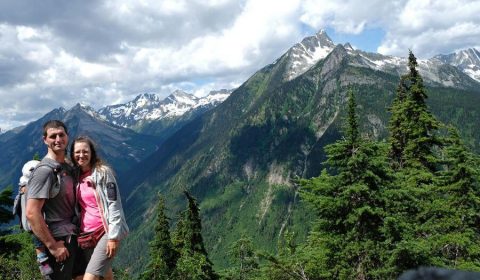
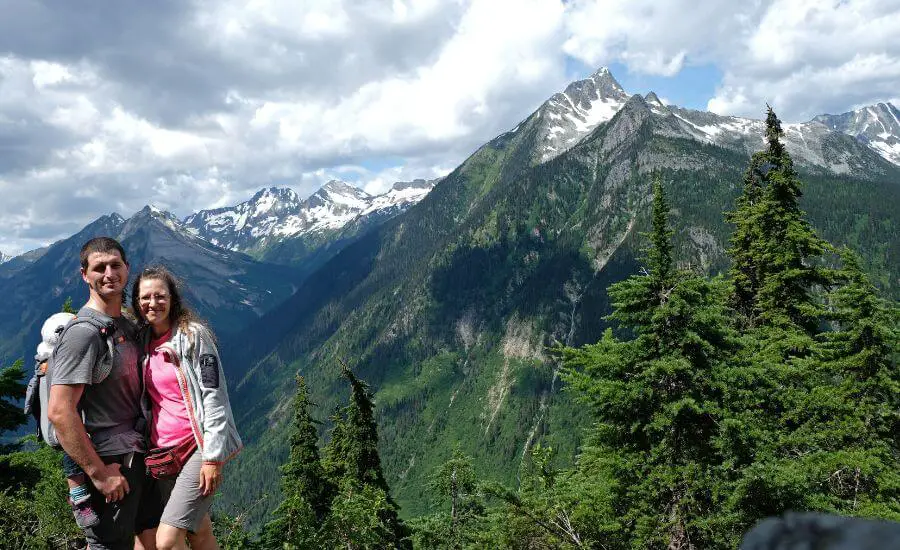
If you only do one major hike in Glacier National Park, make it the Asulkan Valley Trail. This was one of our favorite hikes not just in Glacier National Park, but in all of Canada. It has that rare combination of dramatic glacier-carved scenery, very few people, varied terrain, and a sense that every uphill step is taking you somewhere genuinely spectacular. Oh, and a few marmots basking in the sunshine.
The trail starts in a lush valley with rushing water, forest, and—on a sunny summer day—adorably photogenic marmots. Then, because Glacier National Park likes to keep everyone humble, the trail gets steeper. A lot steeper. At around 7 km one-way, it’s not the longest hike out there, but the elevation gain is real, especially in the final stretch before Asulkan Cabin, up the moraine ridge. This is where our legs began filing formal complaints, even more so as we carried a toddler.

We didn’t do this as a fully toddler-powered hike, obviously. Some parts of Glacier are wonderful with a small child; this is not one of the easy ones. This is more of a serious hiking day, and if you’re traveling as a family, whether it’s realistic will depend on your child, your gear, and your willingness to suffer for views. For us, it was worth every step.
And what views they are. Once the landscape opens up, you get huge alpine panoramas, rugged peaks, glacier-sculpted terrain, and one of those classic Canadian mountain settings that makes you stop talking for a minute because your lungs and your brain are both busy.
Asulkan Valley trail info:
- Trailhead: Illecillewaet Campground
- Distance: 15.8 km return
- Difficulty: strenuous
- Elevation gain: about 870 m
- Our tip: Start early, bring plenty of water, and don’t underestimate the elevation gain.
- See our detailed Asulkan Valley hiking guide.
Why we loved it
- one of the most beautiful hikes in Glacier National Park Canada
- huge payoff for strong hikers
- far fewer people than similarly spectacular hikes in Banff or Jasper
Pick another hike… or two

If you have extra time in Glacier National Park, don’t stop at just one trail. This is the kind of park where it’s very easy to leave with a long list of hikes you didn’t get to do and immediately start plotting a return trip.
That’s exactly what happened to us. I’ve already covered the walks and hikes I’d recommend first if your time is limited: Meeting of the Waters for an easy walk, Bear Creek Falls for a short but worthwhile hike, and Asulkan Valley Trail for the big day out.
But there are plenty of other trails worth adding, depending on your fitness, weather, and how much uphill you’re willing to tolerate. We especially enjoyed Marion Lake Lookout as a more manageable option, and on our last day we hiked the Great Glacier Trail in properly moody weather and got thoroughly soaked. Was that ideal? No. Was it still memorable? Absolutely.

Best easy to moderate trails in Glacier National Park
| Trail | Distance | Difficulty | Trailhead | Notes |
| Hemlock Grove Boardwalk | 350 m loop | Easy | Hemlock Grove Day Use Area | Very short interpretive walk |
| Rockgarden | 430 m loop | Easy | 1.5 km east of Hemlock Grove Day Use Area | Quick roadside stop |
| Loop Brook Trail | 1.7 km loop | Easy | Loop Brook Viewpoint, just east of Loop Brook Campground | Short and family-friendly |
| Marion Lake Lookout | 6.4 km return | Moderate | Illecillewaet Campground | Great option if you want something longer without a full-day commitment |
Best day hikes in Glacier National Park
| Trail | Distance | Difficulty | Trailhead | Notes |
| Great Glacier Trail | 7.9 km return | Moderate | Illecillewaet Campground | Excellent shorter day hike |
| Avalanche Crest | 10.2 km return | Strenuous | Illecillewaet Campground | Big mountain views |
| Abbott Ridge Trail | 15.6 km return | Strenuous | Illecillewaet Campground | One of the park’s classic hikes |
| Perley Rock Trail | 12.8 km return | Strenuous | Illecillewaet Campground | Great alpine scenery |
| Sir Donald | 12.2 km return | Strenuous | Illecillewaet Campground | Demanding hike with dramatic views |
| Hermit Trail | 6.4 km return | Strenuous | 1.5 km east of Rogers Pass Discovery Centre | Very steep despite the shorter distance |
| Balu Pass | 12.8 km return | Strenuous | Rogers Pass Discovery Centre | Popular full-day alpine hike |
How much time do you need in Glacier National Park?

If you’re driving through, even half a day is enough to see a little more than just the highway.
Here’s a rough guide:
Half day in Glacier National Park
- Rogers Pass Discovery Centre
- Meeting of the Waters or Bear Creek Falls
- scenic drive through Rogers Pass

One day in Glacier National Park
- Rogers Pass Discovery Centre
- one short walk or waterfall stop
- one half-day or full-day hike, depending on fitness
Two days in Glacier National Park
- one major hike like Asulkan Valley Trail
- one shorter hike like Bear Creek Falls or Marion Lake Lookout
- extra time for scenic stops, weather flexibility, and a less rushed pace
If you love hiking, one day will feel short. If you’re mostly sightseeing, a half-day stop can still be worthwhile.
To balance out the steeper mountain trails with an easier family stop, Blanket Creek Provincial Park is another lovely place to add to the same road trip. We’ve shared more in our family guide to Blanket Creek Provincial Park.
1-day Glacier National Park itinerary

If you only have one day in Glacier National Park, here’s how I’d plan it.
Option 1: For hikers
- Start at Rogers Pass Discovery Centre
- Hike Asulkan Valley Trail
- Finish with a short scenic stop if you still have energy left in your legs and soul
Option 2: For road trippers and families
- Stop at Rogers Pass Discovery Centre
- Walk Meeting of the Waters
- Hike Bear Creek Falls
- Add Marion Lake Lookout if you want something longer
- Continue driving toward Revelstoke, Golden, Banff, or Yoho

Option 3: For visiting with a toddler
If you have a toddler and everyone’s mood is unpredictable, well, first of all, keep expectations low and snacks plentiful. And be prepared to carry. Yes, it’s one of those parks where you need to carry a young child if you don’t want to miss out on the most epic alpine scenery.
With that said, Meeting of the Waters or Bear Creek Falls are still worthwhile hikes and give you that wild mountain feel. But if you’re like us and want a proper alpine day hike, then fuel up and let your toddler nap in the carrier while you’re climbing a steep moraine ridge.
Where to stay Near Glacier National Park, BC

There are no big resort towns inside Glacier National Park, so most visitors stay in Revelstoke or Golden, depending on which direction they’re traveling.
But if you want the best location and the lowest-cost option, stay at Illecillewaet Campground inside Glacier National Park. That’s what we did, and for hikers, road trippers, and families who don’t mind camping, it’s honestly the choice I’d recommend first to a friend. You’re right in the park, close to several of the best trailheads, and you avoid the extra driving from Revelstoke or Golden.
If camping isn’t your thing, Revelstoke is the best hotel base for most visitors, with Golden as a good alternative if you’re continuing toward Yoho or Banff.
Best place to stay inside Glacier National Park: Illecillewaet Campground

If you don’t mind camping, Illecillewaet Campground is easily the most convenient place to stay for Glacier National Park. This is where we stayed, and it gave us direct access to some of the park’s best hikes without the extra drive from Revelstoke or Golden.
It’s also the most budget-friendly option by far, which matters because accommodation around Glacier National Park can be surprisingly expensive in summer. For families, it’s a great choice if your kids are happy camping and you want to maximize time outdoors rather than time in the car.
That said, if you prefer a proper bed, a hot shower, and easier restaurant access after a long hike—or if camping with a toddler sounds less like an adventure and more like a breakdown waiting to happen—Revelstoke is the best hotel base.
Best hotel base: Revelstoke
Revelstoke is approximately 65 km west of Illecillewaet Campground and makes a great base for visiting both Glacier National Park and Mount Revelstoke National Park. It has a wider range of restaurants, shops, and accommodation than staying closer to the park itself.
If you’re staying in Revelstoke for more than a night, I’d definitely consider adding Mount Revelstoke National Park too. One of our favorite hikes there was the Miller, Eva, and Jade Lakes trail, which you can read about here.
| Hotel | Best for | Family-friendly? | Kitchen? | Notes |
| Sutton Place Hotel Revelstoke Mountain Resort | Travelers wanting a more comfortable resort-style stay with extra space | Yes, with spacious units and family rooms | Yes | Best higher-end option for families or longer stays |
| Swiss Chalet Motel | Families or road trippers looking for a more affordable stay | Yes, with select pet-friendly rooms | No, but rooms include a small fridge | Good-value choice in Revelstoke |
| Revelstoke Lodge | Travelers wanting a simple, practical stay in town | Yes, with select family rooms | No, but rooms include microwave and refrigerator | One of the more affordable well-reviewed stays in town |
Sutton Place Hotel Revelstoke Mountain Resort is the strongest choice if you want a more polished stay after a long hiking day. The studios and apartments are especially practical for longer stays or families who want more space.
Accommodation in this part of British Columbia is rarely cheap, but Swiss Chalet Motel and Revelstoke Lodge are among the more reasonably priced options.

Alternative hotel base: stay in Golden
Golden is approximately 85 km east of Illecillewaet Campground, making it a convenient stop if Glacier National Park is part of a larger trip toward Yoho National Park, Banff, or Kicking Horse.
If you’re continuing east, Yoho National Park is another fantastic stop nearby, and I’ve shared my full Yoho guide here.
| Hotel | Best for | Family-friendly? | Kitchen? | Notes |
| Holiday Inn Express Golden-Kicking Horse | Families wanting reliable amenities and an easy hotel stay | Yes | No | Good all-round option with indoor pool and fitness center |
| Travelodge by Wyndham Golden Sportsman Lodge | Travelers looking for a more affordable stay with family-friendly extras | Yes | No | Indoor pool with slide, hot tub, sauna, and breakfast |
| Rocky Mountain Cabins and Home | Families or road trippers wanting a quieter stay with more space and self-catering facilities | Yes | Yes, kitchenette | Located along Highway 1 outside Golden, closer to Glacier National Park than staying in town |
Rocky Mountain Cabins and Home is a particularly good option if you want something more atmospheric than a standard hotel without losing practicality. The kitchenette, outdoor space, mountain views, and location along Highway 1 make it a great fit for travelers heading to or from Glacier National Park.
Best time to visit Glacier National Park, British Columbia

The best time to visit Glacier National Park in Canada for hiking is usually from July to September. This is a very snowy park, and many of the higher trails are only accessible during a relatively short summer window. If you visit too early in the season, you may find snow lingering on trails that look deceptively manageable on paper.
We visited in both July and August, and even then it was obvious that this is not a park that gives up winter easily. Conditions can change quickly, especially at higher elevations, and mountain weather here does not care about your carefully color-coordinated hiking outfit.
Summer in Glacier National Park
- best for hiking
- longest trail access
- wildflowers, glacier views, and generally the best conditions
Early fall in the park
- fewer visitors
- cooler weather
- possible early snow at higher elevations
Spring and early summer
- beautiful lower trails
- powerful waterfalls and rivers
- snow may still affect many hikes
Always check trail conditions before setting out.
What surprised us most about Glacier National Park

First, it felt much quieter than we expected. Coming from Vancouver, where trailhead parking is often full by 9am in the summer, Glacier National Park felt shockingly peaceful.
Second, the scenery gets dramatic very quickly. This is not a park where you have to hike forever through mediocre forest waiting for a viewpoint that may or may not happen. Even shorter trails feel scenic, and the bigger hikes deliver proper alpine drama.
Third, it felt less “touristy” than many other famous mountain parks. Depending on your personality, this is either a huge plus or a sign that you should not expect coffee shops, shuttle systems, and easy-viewpoint convenience every five minutes.
And finally: some of these hikes are steeper than they sound. Glacier National Park has a very casual way of making a trail seem reasonable on paper and then smacking your legs with reality halfway up. It’s still worth it (even when you’re carrying a toddler).
What we were glad we packed for Glacier National Park

Even in summer, Glacier National Park is not the kind of place where you want to wing it with one water bottle and a vague belief in sunshine.
What stood out to us here was how quickly conditions could change—and how much more complicated even a fairly normal hike becomes once you add a toddler, extra layers, snacks, and the occasional emergency stick collection to the equation.
Here’s what we were especially glad to have with us:
Waterproof jacket. Not optional if the weather turns or if you’re heading to Bear Creek Falls. On wetter days, we were especially glad to have proper waterproof layers, because this park does not do gentle drizzle convincingly. We’ve linked reliable options for women and men below:
- Women’s pick: 33,000ft Women’s Waterproof Raincoat
- Men’s pick: NORDIC OUTLAND Men’s Waterproof Rain Jacket
Extra layers. This park has a habit of feeling warm at the trailhead and much less friendly higher up. This is the kind of light fleece that works really well on these trails, even in summer:
- Women’s pick: Columbia Women’s Benton Springs Full Zip
- Men’s pick: Columbia Men’s Steens Mountain Full Zip 2.0

Proper hiking shoes. Some of the shorter hikes are still steep, and slippery sections are not unusual. These are the kinds of boots we wear for alpine day hikes:
- Women’s pick: Columbia Women’s Newton Ridge Plus Waterproof Hiking Boots
- Men’s pick: Columbia Men’s Newton Ridge Plus II Waterproof Hiking Boots
Plenty of water. Especially important on longer hikes like Asulkan, where the effort level is higher than the distance might suggest.
Snacks and lunch. For us, this was less “nice to have” and more “essential family diplomacy”. Also, there’s no store, café or restaurant anywhere near most trailheads. You eat what you have. If you’re wondering what to pack, here’s my guide to the best hiking snacks for every trail.

Sun protection. Once the sun is out higher elevations and exposed sections can feel intense in summer.
Bear spray. This is grizzly country, so keep your bear spray accessible, not buried at the bottom of your backpack. On some trails, it might even be mandatory or strongly recommended to hike in groups of 4.
Trekking poles. Very helpful on steeper trails, especially if one of you is also carrying a child
Child carrier. A must for us on anything beyond an easy walk. Our toddler was happiest when we let him walk the flatter forest sections, but on steeper trails the carrier quickly became non-negotiable. At this point we were finished with the hard-framed carrier backpacks (it was too heavy), and preferred a more lightweight toddler carrier.

What I’d particularly stress in Glacier National Park is that this is not a place with lots of convenient services once you’re out on the trail, or simply inside the park. If you forget something important, the mountains are unlikely to be sympathetic.
That’s why we found it worth packing a little more carefully here than we might for a short walk elsewhere in the Canadian Rockies. We still got soaked as we did the Great Glacier Trail in pouring rain, there and back. Turns out, even truly waterproof gear has its limit—and we managed to reach it. It’s a good idea to have dry spare clothes in your car, not only for your child, but for the whole family.
👉 If you’re still figuring out what to wear for long hiking days, I’ve also rounded up my favorite hiking leggings and yoga pants for women here.
Useful tips before visiting Glacier National Park Canada

Save on park fees. Canada’s national parks require an entrance fee, and if you’re visiting multiple parks, the Parks Canada Discovery Pass is the best deal. It grants unlimited access to over 80 destinations for an entire year—perfect for road trips!
Stay bear aware. This is bear country. Carry bear spray, keep it accessible, make noise on trails, and read current wildlife guidance before heading out.
Start early for bigger hikes. The trails here are often steeper and more demanding than they first appear.
Don’t expect lots of services inside the park. Even cell coverage is patchy. Stock up on food and drinks, download trail maps, have spare clothes and a small first aid kit in your car.
Don’t underestimate family timing. If you’re hiking with a toddler, a trail that looks short on paper can still take much longer than expected once snack breaks, carrying shifts, and random “I need this exact rock” moments are factored in.
Final thoughts on visiting Glacier National Park, Canada
Glacier National Park in British Columbia ended up being one of the most memorable stops on our Canadian Rockies road trip—not because it was the most famous, but because it wasn’t.
It felt quieter, wilder, and more rewarding than we expected, with that perfect combination of accessible roadside scenery and serious hiking opportunities. We loved that we could enjoy parts of it as a family with our toddler, while also finding bigger adventures that reminded us why we keep coming back to mountain parks in the first place.
If you’re driving between Vancouver and Banff, don’t make the mistake of treating Glacier National Park of Canada as just another stretch of scenic highway. Stop and get a little wet at a waterfall. Carry a small child uphill if that’s the season of life you’re in. It’s worth it.
Planning a BC road trip?
If Glacier National Park left an impression, the rest of the Kootenays will deepen it. I spent over a year mapping routes and identifying places that rarely make it into standard itineraries.
My BC Road Trip Guide E‑Book is the resource I wish I’d had when we first moved here. It has clear routes, local insight, and no filler.
Frequently Asked Questions About Glacier National Park, British Columbia
No. Glacier National Park in Canada is in British Columbia, while the more famous Glacier National Park is in Montana, USA.
Yes, especially for hikers and road trippers looking for a quieter, less crowded mountain park with excellent trails and dramatic scenery.
Some of the best hikes include Asulkan Valley Trail, Great Glacier Trail, Bear Creek Falls, Abbott Ridge Trail, and Marion Lake Lookout.
Yes. The Trans-Canada Highway runs directly through the park, making it easy to visit on a road trip.
Half a day is enough for a scenic stop and short hike, one day is enough for a proper visit, and two days is much better if you like hiking.
It can be, as long as you choose your trails carefully. Short walks like Meeting of the Waters work well with young children, while bigger hikes are more suitable for experienced hiking families or parents prepared to carry little ones.